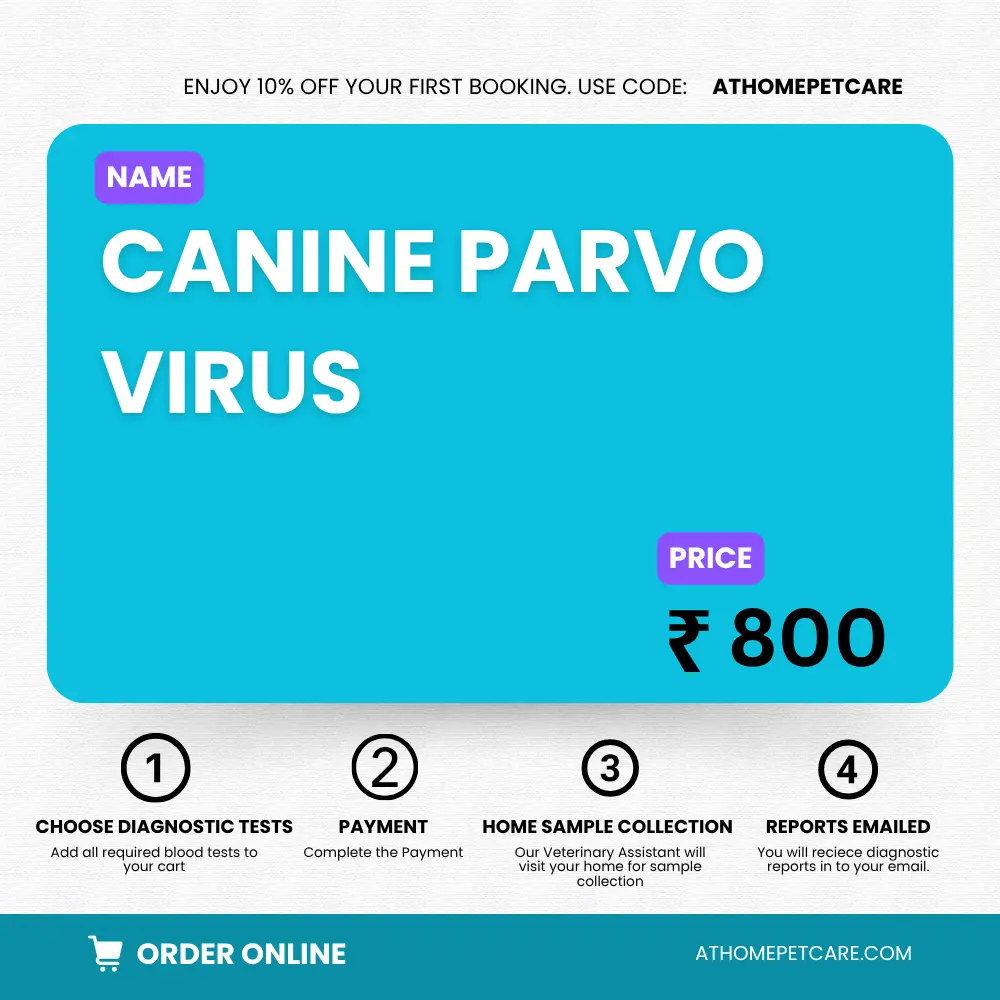
CANINE PARVO VIRUS
₹800.00
Canine Parvovirus (CPV) PCR Test — the gold-standard diagnostic for detecting CPV-2 in dogs with sudden bloody diarrhea, vomiting, and lethargy. Highly accurate (93%+ sensitivity) — ideal when rapid antigen kits give negative results but parvo is still suspected. Book doorstep fecal sample collection in Hyderabad with At Home Petcare. Results in 2–5 working days. Early diagnosis saves lives.
Description
Canine Parvovirus (CPV) Test is a critical diagnostic service for detecting one of the most dangerous and highly contagious viral diseases affecting dogs in India. Canine Parvovirus Type 2 (CPV-2) causes severe hemorrhagic gastroenteritis, bone marrow suppression, and life-threatening dehydration — especially in unvaccinated puppies. Without treatment, mortality can exceed 90% in puppies. Early and accurate diagnosis is the single most important step in saving your dog’s life. At Home Petcare brings this essential diagnostic service directly to your doorstep in Hyderabad.
What Is Canine Parvovirus?
Canine Parvovirus Type 2 (CPV-2) is a highly stable, non-enveloped DNA virus that attacks rapidly dividing cells in the body — primarily the lining of the intestines, bone marrow, and in very young puppies, the heart muscle. The virus spreads through direct contact with infected dogs or contaminated feces, soil, surfaces, or objects. CPV can survive in the environment for months to years, making it extremely difficult to contain once present in a household or neighbourhood.
In India, multiple strains of CPV-2 circulate including CPV-2a, CPV-2b, and CPV-2c. Studies from Andhra Pradesh and Telangana have detected CPV-2a as the predominant strain. The virus does not discriminate between breeds, but certain breeds including Rottweilers, Dobermans, German Shepherds, and Labrador Retrievers are known to be more susceptible to severe infection.
Who Is at Risk?
- Unvaccinated puppies (6 weeks to 6 months): The highest-risk group. Maternal antibodies wane around 6–12 weeks, creating a window of vulnerability before full vaccination is complete.
- Incompletely vaccinated dogs: Dogs that have not received all doses of their puppy vaccination series or booster shots.
- Adult dogs in high-exposure environments: Dogs in shelters, kennels, dog parks, or multi-dog households where CPV contamination is possible.
- Immunocompromised dogs: Dogs on immunosuppressive medications or with underlying illness.
- High-risk breeds: Rottweilers, Doberman Pinschers, German Shepherds, Labrador Retrievers, and American Pit Bull Terriers.
Signs and Symptoms of Parvovirus in Dogs
Symptoms typically appear within 3–7 days after exposure to the virus. The disease progresses rapidly and can become critical within 24–48 hours of symptom onset.
- Sudden, severe lethargy and extreme weakness
- Complete loss of appetite (anorexia)
- High fever (or in severe cases, dangerously low body temperature)
- Profuse, foul-smelling, and often bloody diarrhea — the hallmark sign of parvoviral enteritis
- Repeated, uncontrolled vomiting
- Severe dehydration — sunken eyes, dry gums, loss of skin elasticity
- Pale or whitish gums (indicating anaemia or shock)
- Bloated or painful abdomen
- Rapid breathing and weakness
If your puppy or dog shows any combination of these signs — especially bloody diarrhea and repeated vomiting — seek veterinary attention immediately. Every hour matters.
How Is Canine Parvovirus Diagnosed?
Multiple diagnostic methods are available, and understanding their differences helps pet parents make informed decisions:
- Rapid Antigen Test (SNAP/Scanvet kit): A quick point-of-care test using a fecal swab. Results in 5–10 minutes. High specificity but low sensitivity (15–60%) — a negative result does NOT rule out parvovirus. Useful for quick initial screening but can miss many true positive cases.
- PCR (Polymerase Chain Reaction): The gold standard for CPV diagnosis. Detects viral DNA directly from fecal samples, rectal swabs, or blood. Studies confirm PCR sensitivity of over 93% — significantly superior to rapid antigen tests. PCR can also identify the specific CPV-2 strain (CPV-2a, CPV-2b, CPV-2c), which aids in understanding outbreak patterns and treatment decisions.
- Haemagglutination (HA) test: A laboratory method that detects the virus’s ability to clump red blood cells. Less sensitive than PCR but used in some research settings.
- CBC (Complete Blood Count): Supports CPV diagnosis by identifying severe leukopenia (very low white blood cell count) — a characteristic finding of parvovirus infection.
At Home Petcare offers the PCR-based Canine Parvovirus test for definitive, high-accuracy diagnosis — particularly valuable when a rapid antigen test is negative but clinical signs strongly suggest parvo, or when strain identification is needed.
When Should You Book This Test?
- Your puppy (especially under 6 months) has sudden bloody diarrhea and/or vomiting
- A rapid parvo antigen test was negative but your vet still suspects parvovirus
- Multiple dogs in your home or neighbourhood are falling ill simultaneously
- A new dog or puppy was recently introduced and now showing gastrointestinal signs
- Your dog attended a dog park, boarding facility, or shelter and developed illness within 3–7 days
- You want to confirm recovery and viral clearance after treatment (post-treatment testing)
- Pre-vaccination screening in multi-dog environments or breeding kennels
Sample Requirements
- Primary sample: Fecal sample (fresh stool) or rectal swab — most sensitive specimen for CPV detection
- Alternative samples: Whole blood (EDTA tube) — useful when fecal sample is not available or for systemic infection assessment
- Collection timing: Best collected during active illness, ideally before starting antiviral or immunosuppressive treatment
- Collection method: Performed at your home by At Home Petcare’s trained veterinary professional using sterile collection swabs and appropriate transport containers
- Storage: Samples kept refrigerated and transported promptly to a certified veterinary molecular diagnostic laboratory
Understanding Your Results
- PCR Positive: Confirms active CPV infection. Your veterinarian will initiate intensive supportive treatment immediately — IV fluids, antiemetics, antibiotics (to prevent secondary bacterial infections), nutritional support, and in some cases, monoclonal antibody therapy. Strict isolation of the infected dog from other pets is mandatory.
- PCR Negative: CPV DNA not detected. If clinical signs persist, your vet may investigate other causes of hemorrhagic gastroenteritis (e.g., Coronavirus, Salmonella, dietary indiscretion, intussusception). A negative result with strong clinical suspicion warrants repeat testing or alternative diagnostics.
Treatment Overview
There is no direct antiviral cure for parvovirus in dogs. Treatment is intensive supportive care and must be started as early as possible:
- IV fluid therapy to combat severe dehydration and electrolyte imbalances — the most critical intervention
- Antiemetics (e.g., Maropitant) to control vomiting and allow oral fluid intake
- Broad-spectrum antibiotics to prevent life-threatening secondary bacterial sepsis (due to damaged intestinal barrier)
- Nutritional support — feeding tube if the dog cannot eat voluntarily
- Blood transfusions in cases of severe anaemia
- Canine Parvo Monoclonal Antibody (CPMA) — an emerging targeted therapy now available at advanced veterinary clinics in India
With prompt treatment, survival rates improve significantly. Without treatment, mortality in puppies can exceed 90%. With proper intensive care, survival rates of 70–90% are achievable.
Prevention — The Best Medicine
- Vaccination: The most effective prevention. The core DHPP/DHPPiL vaccine (Distemper, Hepatitis, Parvovirus, Parainfluenza ± Leptospirosis) should be administered starting at 6–8 weeks, with boosters every 3–4 weeks until 16 weeks, followed by annual or triennial boosters as advised by your vet.
- Environmental decontamination: CPV is resistant to most household cleaners. A 1:30 dilution of household bleach (sodium hypochlorite) on surfaces and floors is one of the few effective disinfectants.
- Isolation of new dogs: Any new dog or puppy should be quarantined for at least 2 weeks before introduction to other pets.
- Avoid high-risk areas: Unvaccinated puppies should not visit dog parks, pet shops, or veterinary waiting rooms until fully vaccinated.
Important Information for Pet Parents
- Parvovirus is not contagious to humans — CPV-2 is canine-specific and poses no zoonotic risk
- The virus can survive on shoes, clothing, and hands — humans can inadvertently carry the virus to unvaccinated dogs without becoming ill themselves
- Dogs that recover from CPV infection shed the virus in their feces for up to 3–4 weeks after clinical recovery — maintain isolation during this period
- This is a prescription veterinary diagnostic service — sample collection and interpretation must be supervised by a licensed veterinarian
Frequently Asked Questions
My dog tested negative on a rapid parvo kit but still has bloody diarrhea. Should I still be worried?
Yes, absolutely. Rapid antigen kits have documented sensitivity of only 15–60% compared to PCR. A negative rapid test does not rule out parvovirus. If your dog shows classic signs of parvo, a PCR test is strongly recommended for a definitive answer. Do not delay treatment while waiting for PCR results if your dog is critically ill — begin supportive care immediately.
Can vaccinated dogs get parvovirus?
While rare, vaccinated dogs can occasionally contract parvovirus, particularly if they were vaccinated too early (while maternal antibodies were still present), missed booster doses, or encountered an unusually high viral load. The disease in vaccinated dogs is typically much milder and survivable.
How long does parvovirus survive in the environment?
CPV-2 is an extremely hardy virus and can survive in soil and indoor environments for months to years. Standard household cleaners do not kill it. Bleach solution (1 part bleach to 30 parts water) is the recommended disinfectant for contaminated surfaces and flooring.
How soon can my dog be around other dogs after recovering from parvo?
Recovered dogs continue to shed CPV in their feces for 3–4 weeks after clinical signs resolve. Full isolation from other unvaccinated dogs is essential during this period. A post-treatment PCR test can confirm viral clearance before reintroduction to other pets.
Is this test available at home in Hyderabad?
Yes. At Home Petcare provides doorstep sample collection across Hyderabad. Our trained veterinary professional visits your home, collects the fecal or blood sample safely, and ensures prompt transport to a certified laboratory. Results are available in 2–5 working days.
Only logged in customers who have purchased this product may leave a review.



Reviews
There are no reviews yet.