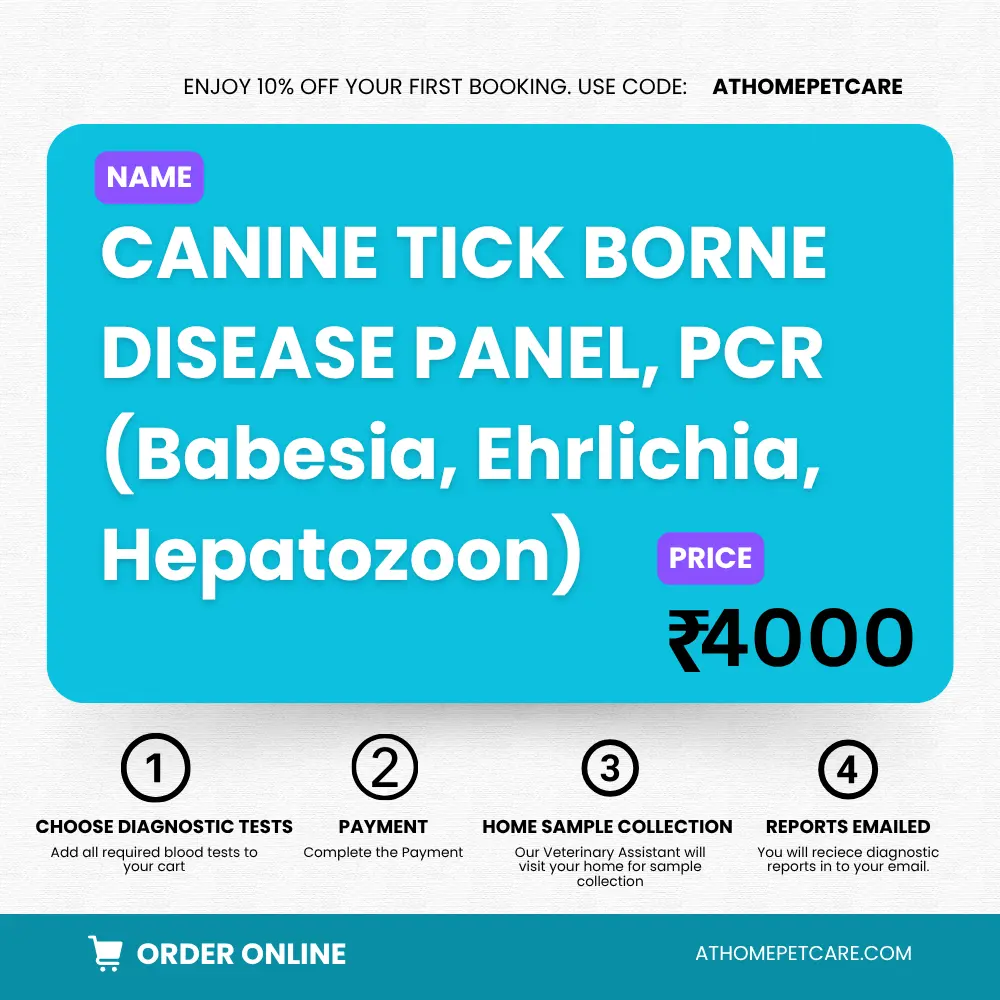
CANINE TICK BORNE DISEASE PANEL, PCR (Babesia, Ehrlichia, Hepatozoon)
₹4,000.00
Canine Tick Borne Disease Panel PCR simultaneously detects Babesia, Ehrlichia canis, and Hepatozoon canis — the three most common tick-transmitted pathogens in dogs — from a single blood sample. Ideal for dogs with tick fever, pale gums, dark urine, unexplained anaemia, or bleeding disorders. Book doorstep sample collection in Hyderabad with At Home Petcare. Results in 2–5 working days.
Description
Canine Tick Borne Disease Panel PCR (Babesia, Ehrlichia, Hepatozoon) is a comprehensive multiplex molecular diagnostic test that simultaneously detects the three most common tick-transmitted pathogens affecting dogs in India — Babesia spp., Ehrlichia canis, and Hepatozoon canis — from a single blood sample. This panel is especially relevant for dogs in Hyderabad and across Telangana where tick infestations are prevalent year-round due to the warm, humid climate. Early and accurate diagnosis allows your veterinarian to initiate targeted treatment promptly, reducing the risk of life-threatening complications.
What Does This Panel Test For?
1. Babesia spp. (Canine Babesiosis / Tick Fever)
Babesia vogeli and Babesia gibsoni are the two most prevalent species in Indian dogs. These protozoan parasites invade and destroy red blood cells, causing severe haemolytic anaemia. Transmitted primarily by the Rhipicephalus sanguineus (brown dog tick), Babesia infections can rapidly become life-threatening if not treated early.
- Clinical signs: High fever, pale or yellowish gums (jaundice/icterus), dark red or orange-coloured urine (haemoglobinuria), severe weakness and lethargy, loss of appetite, enlarged spleen
- Treatment: Imidocarb dipropionate (for B. vogeli); Atovaquone + Azithromycin combination (for B. gibsoni)
2. Ehrlichia canis (Canine Monocytic Ehrlichiosis)
Ehrlichia canis is an intracellular bacterium that infects white blood cells (monocytes), suppressing the immune system and causing widespread blood abnormalities. It is one of the most common tick-borne diseases in dogs in India, with studies from Andhra Pradesh and Telangana reporting high prevalence. PCR is the gold standard for detecting active infection, unlike serology which can remain positive after recovery.
- Clinical signs: Prolonged fever, loss of appetite and weight loss, bleeding from the nose or gums (epistaxis), swollen lymph nodes, anaemia and thrombocytopenia (low platelet count), joint pain and lameness
- Treatment: Doxycycline (6–8 weeks); supportive care including blood transfusions in severe cases
3. Hepatozoon canis (Canine Hepatozoonosis)
Hepatozoon canis is unique among tick-borne pathogens — dogs become infected by ingesting infected ticks, not through tick bites. The parasite invades white blood cells and muscle tissue. Molecular epidemiology studies from South India including Odisha and Andhra Pradesh have confirmed its presence in this region. Co-infections with Babesia and Ehrlichia are commonly observed and worsen disease severity.
- Clinical signs: Fever, muscle pain and stiffness, generalised weakness, weight loss, pale gums, enlarged lymph nodes, eye discharge
- Treatment: Combination therapy — Trimethoprim-sulphadiazine, Pyrimethamine and Clindamycin; followed by long-term Decoquinate to prevent relapse
Why Is a Panel Test Better Than Individual Tests?
- Detects co-infections: Research from South India shows that simultaneous co-infection with two or more of these pathogens is common. A study from Andhra Pradesh found co-infections in a significant proportion of tested dogs — treating only one pathogen while missing another leads to treatment failure.
- Single sample, triple result: One blood draw covers all three pathogens, reducing stress on the dog and the pet parent.
- Higher accuracy than blood smear: PCR detects pathogen DNA directly from blood, making it far more sensitive than conventional blood smear microscopy, especially in early or low-level infections.
- Guides targeted treatment: Knowing exactly which pathogen(s) are present allows your vet to prescribe the correct drug at the right dose, avoiding unnecessary broad-spectrum treatment.
- Monitors treatment response: Post-treatment PCR confirms pathogen clearance, unlike serology where antibodies can persist long after recovery.
When Should You Book This Test?
- Your dog has a sudden high fever, especially after tick exposure
- Pale, yellow, or white gums noticed at home
- Dark-coloured (red, brown, or orange) urine
- Sudden loss of appetite, extreme lethargy or weakness
- Unexplained bleeding — from nose, gums or under the skin (petechiae)
- Swollen lymph nodes or an obviously distended abdomen (enlarged spleen)
- Blood tests show low platelet count (thrombocytopenia) or anaemia
- Dog is not recovering despite antibiotic treatment — consider co-infection
- High tick burden in your neighbourhood or recent travel to a tick-endemic area
- Pre-treatment baseline before starting imidocarb or doxycycline therapy
Sample Requirements
- Sample type: Whole blood (EDTA / lavender-top tube) — minimum 1 mL
- Collection: Sample collected at your home by our trained veterinary professional as part of the At Home Petcare doorstep service
- Storage & transport: Kept refrigerated and transported to a certified veterinary molecular diagnostic laboratory within the required time window
- Timing: Sample is best collected before starting antibiotic or antiprotozoal treatment, as prior medication can reduce PCR sensitivity
Understanding Your Results
- Positive for Babesia: Antiprotozoal treatment to be started immediately; species identification guides drug selection (imidocarb vs. atovaquone/azithromycin)
- Positive for Ehrlichia canis: Doxycycline course initiated; CBC monitoring recommended throughout treatment
- Positive for Hepatozoon canis: Combination anti-protozoal therapy discussed with your vet; long-term management plan advised
- Positive for multiple pathogens: Combined treatment protocol required; prognosis depends on disease stage and organ involvement
- Negative result: No pathogen DNA detected in the tested sample; if clinical signs persist, your vet may recommend repeat testing or additional diagnostics (CBC, biochemistry, serology)
Important Information for Pet Parents
- Tick-borne diseases are preventable — year-round tick control using veterinarian-recommended spot-on treatments, tick collars, or oral tick preventives significantly reduces risk
- Check your dog’s coat and skin regularly for ticks, especially after walks in grassy or wooded areas
- Never remove ticks with bare hands — use a tick remover tool and consult your vet
- Dogs that have recovered from Ehrlichiosis or Babesiosis may remain susceptible to re-infection; ongoing tick prevention is essential
- This is a prescription veterinary diagnostic service — sample collection and test interpretation must be supervised by a licensed veterinarian
Frequently Asked Questions
What is the difference between tick fever and this panel test?
“Tick fever” is a general term used for any illness caused by tick-transmitted organisms. This PCR panel specifically identifies which pathogen(s) are responsible — Babesia, Ehrlichia, or Hepatozoon — so your vet can prescribe the exact right treatment rather than guessing.
Can my dog have more than one tick-borne disease at the same time?
Yes. Co-infections are well-documented in India, particularly in South India including Andhra Pradesh and Telangana. Studies have shown dogs co-infected with Babesia, Ehrlichia, and Hepatozoon simultaneously. Co-infected dogs often have more severe symptoms and require combination therapy.
Is this test useful if my dog is already on antibiotics?
PCR is most sensitive before antibiotic or antiprotozoal treatment begins. If your dog has already started medication, inform the veterinarian — a negative result does not rule out infection and your vet may recommend serology as a complementary test.
How long does it take to get results?
Typical turnaround time is 2–5 working days from the date the sample reaches the certified molecular diagnostic laboratory. Your At Home Petcare veterinarian will communicate results and recommend the next steps.
Is this test available at home in Hyderabad?
Yes. At Home Petcare provides complete doorstep sample collection in Hyderabad. Our trained veterinary professional visits your home, collects the blood sample, and coordinates transport to the laboratory — no need for a stressful clinic visit for your pet.
Only logged in customers who have purchased this product may leave a review.




Reviews
There are no reviews yet.